Most Australians assume that a larger super balance always means a better retirement income. The reality is more nuanced.
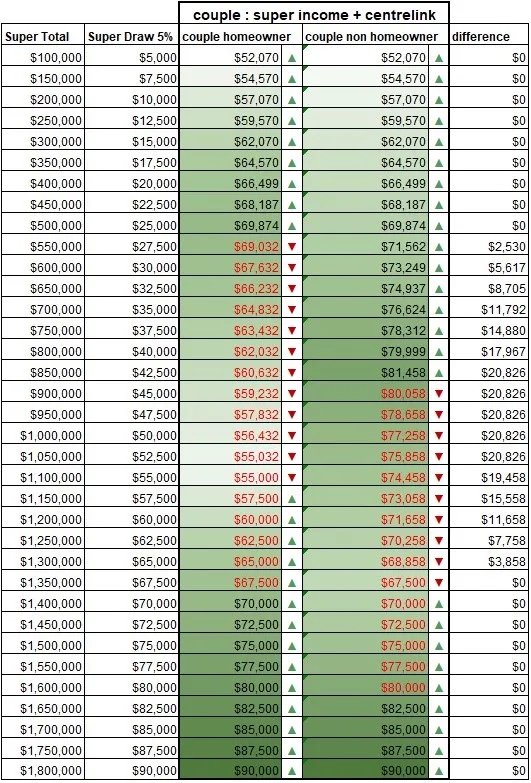
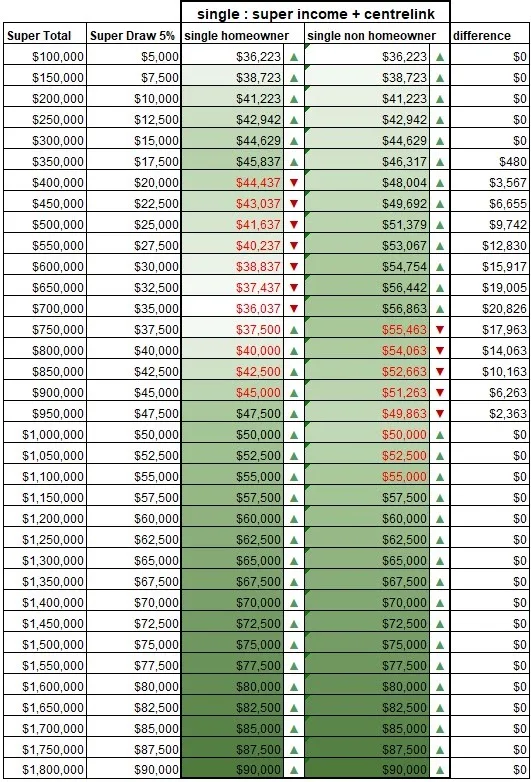
Because the Age Pension is means tested, the relationship between your super balance and your total retirement income is not linear. At certain balance levels, drawing down super reduces your Age Pension entitlement faster than it adds spending power, creating a zone where more savings can actually produce less income.
The tables below map total annual retirement income across a range of starting super balances for singles and couples. The green shading identifies peak income levels, the red figures and downward arrows highlight where income is falling, and the Sweet Spot marks the balance at which combined income from super and the Age Pension is maximised.
Understanding where you sit on this table, and why, is one of the most important insights in retirement planning.
Want this table for your own situation? These published tables use fixed assumptions, but PensionLens now builds the same table live from your actual figures: your super, your assets, your income, current rates. It draws your whole curve, marks your Sweet Spot, and pins exactly where you stand. Try PensionLens hereÂ
These tables are taken from The Long Weekend: Putting the Retirement Puzzle Together, available on Amazon.
Note: These tables are based on the following assumptions: a 5% annual drawdown rate from superannuation, $20,000 in assessable household assets outside super, and 2025-26 Age Pension rates and thresholds. The two columns show results for homeowners and non-homeowners respectively. Results will vary based on individual circumstances.
Super laws, tax rules, and Centrelink assessments are complex, frequently changing, and include many exceptions. The information provided is general in nature, current as of 2026, and is not financial, legal, or tax advice. Individual circumstances, fund types, and grandfathered provisions may affect these rules, and rates and thresholds can change without notice. You should consult a licensed financial adviser, tax agent, or qualified professional before making decisions about your super, retirement, or estate planning.